 Samsung Display, the world's largest display maker was spun off from Samsung Electronics in April 2012. Samsung Display is one of the world's leading display producers, and the company produces LCDs, QD-enhanced LCDs, OLEDs and soon QD-OLED displays.
1 Samsung-Ro
Giheung-Gu
Yongin
South Korea
Samsung shows an inkjet-printed 18.2" QD-EL prototype
During Displayweek 2024, Samsung demonstrated its latest display prototypes, focusing mostly on flexible OLEDs, and QD-OLEDs.
The company also showed a 18.2" 3200x1800 (202 PPI) 250 nits QD-EL display, that was produced using an inkjet-printing process, based on cadmium-free QDs.
Samsung's QD-OLED technology's future is uncertain
Samsung Display recently decided to move around 500 engineers from its large-area QD-OLED business unit to its small-and-medium sized AMOLED business unit. This move could signal a change in SDC's confidence in its QD-OLED technology.
A new article at OLED-Info discusses the technology and market challenges of QD-OLEDs, the recent activities in the display industry and market - and states that Samsung may be not invest further in its QD-OLED technology.
DSCC: the QD materials market to reach $100 million in 2024, will grow to $122 million by 2027
DSCC says that the demand for QD materials in the display industry is growing, and the market will grow to $100 million in 2024. It will continue to grow and reach $122 million in 2027.
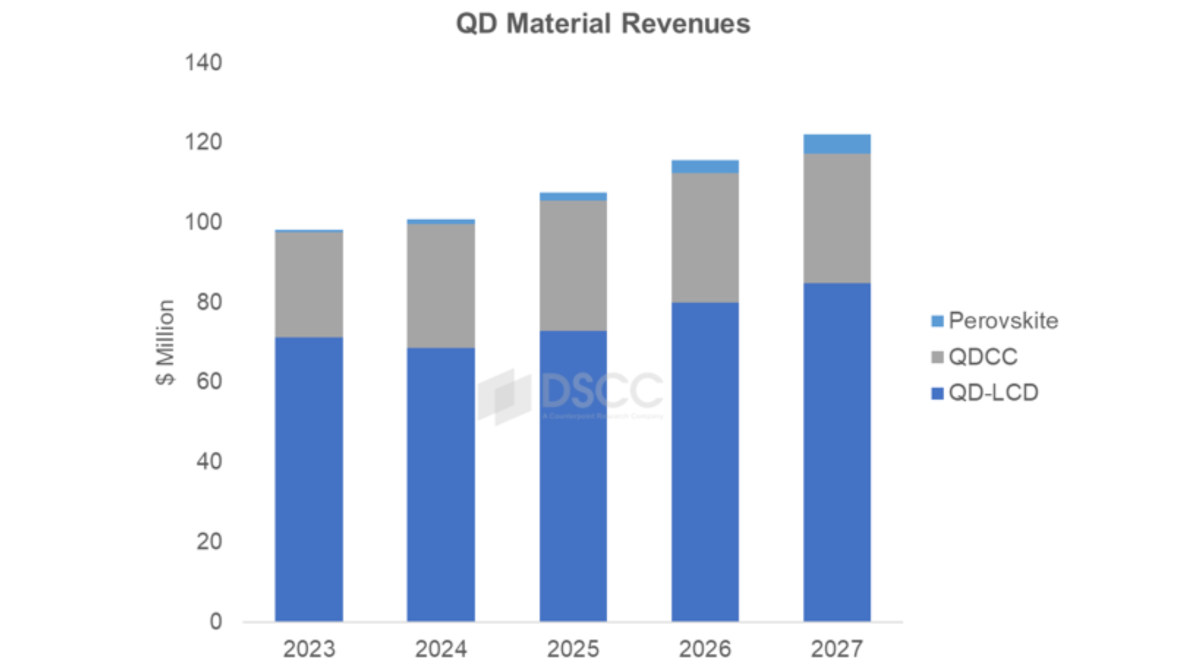
The main application is in LCD displays (color conversion), but materials used in QD-OLED's (by Samsung Display) is growing and accounts for 31% of the market (in the chart above DSCC notes QD-OLEDs as QD-CC). Production of QD-OLED panels is limited (SDC's total capacity is for around 2 million panels per year) but the material usage is large compared to QD-LCDs.
New QD-OLED TVs and monitors announced at CES 2024
During CES 2024, several device makers announced new TVs and monitors based on Samsung Display's QD-OLED panels. It seems as if market acceptance for SDC's high-end QD panels is on the rise:
- Samsung Odyssey 2024 gaming monitors (27" 1440p 360Hz / 32" 4K 240Hz / 49" 5120x1440 240Hz QD-OLED
- Samsung S95D, S90D, S85D (QD-OLED and WOLED TVs)
- Gigabyte AORUS 2024 QD-OLED monitors (27", 31.5", 34" QD-OLEDs)
- HP Omen Transcend 32 gaming monitor (32" 240Hz 4K QD-OLED)
- Dell Alienware AW2725DF / AW3225QF monitors (27", 32" QD-OLEDs)
Samsung Electronics launches three new QD-OLED gaming monitors
Samsung Electronics announced their upcoming 2024 QD-OLED gaming monitor range. It starts with the flagship Odyssey G9 (G95SD) gaming monitor that offers a curved 49-inch 32:9 5120x1440 240Hz QD-OLED panel. The other two monitors offer a flat panel. The Odyssey G6 is a 27-inch 1440p monitor that offers very fast 360Hz refresh rate, while the Odyssey G8 (model G80SD) is a larger monitor, with a 32" 240Hz QD-OLED panel.
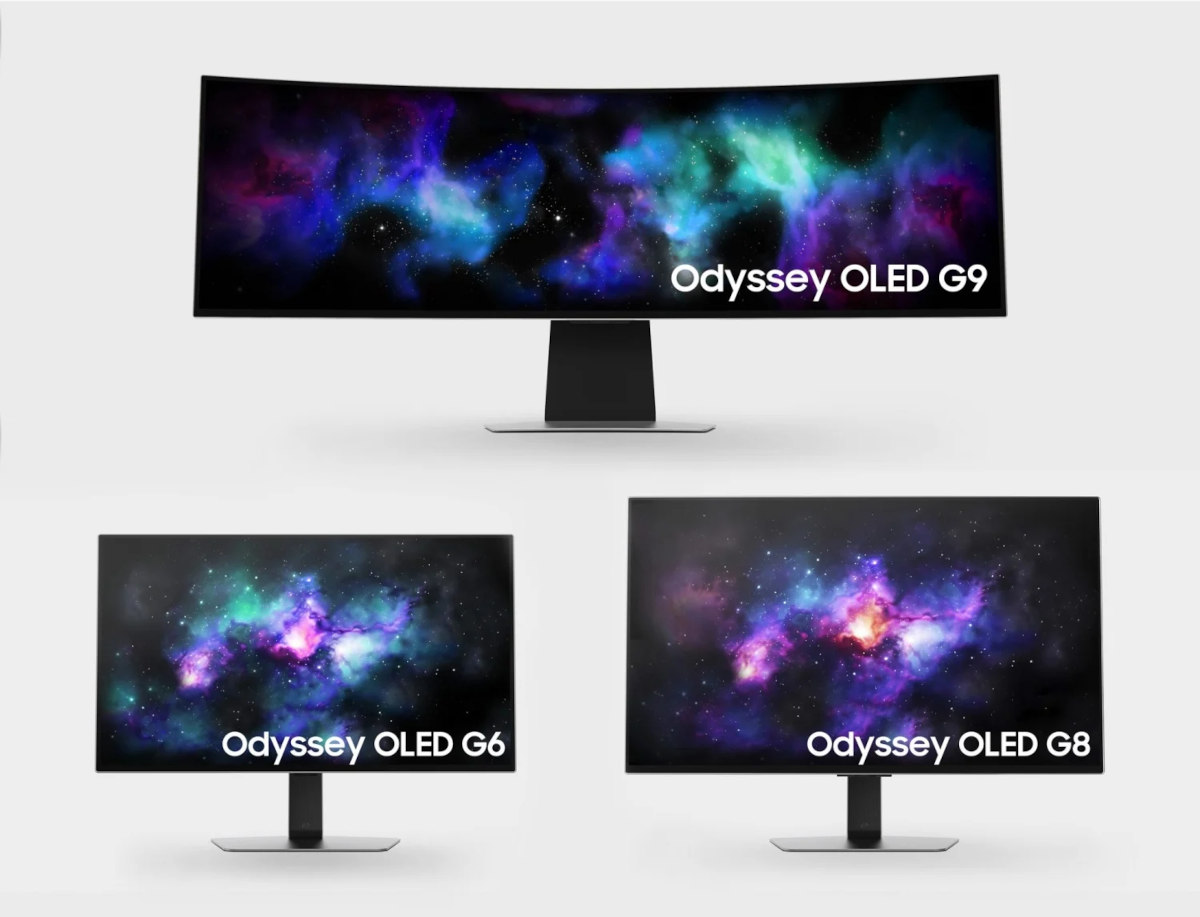
All of Samsung's QD-OLED gaming panels offer a response time of 0.03, VESA DisplayHDR True Black 400 certification and AMD FreeSync Premium Pro. Samsung did not yet detail the pricing or availability of its new panels.
MSI announces six new QD-OLED gaming monitors
MSI announced its upcoming MAG 2024 monitor range, which includes 6 different models, with a 27-inch 2560x1440 360Hz, 32" 175Hz 3440x1440 or 49" 144Hz 5120x1440 QD-OLED panels, produced by Samsung Display.
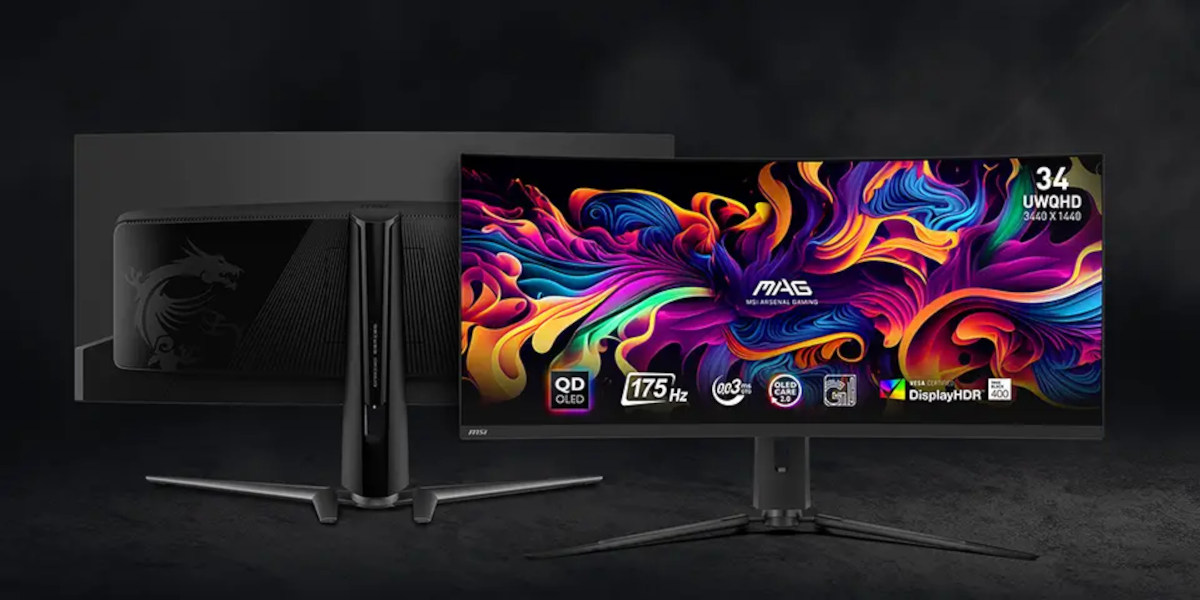
The monitors make use of a graphene heatsink for thermal dissipation, which MSI says is very efficient and so extends the life time of the QD-OLED panels.
Sony's QD-OLED TV wins the 2023 Value Electronics TV shootout
Value Electronics hosted their annual TV shootout, checking several high-end TVs to see which model provides the best images.
There were six TVs tested in the 4K TV category, two QD-OLEDs, one OLED, and three mini-LED LCDs. The best TV was Sony's A95L QD-OLED TV. The runner-ups were Samsung's S95C (another QD-OLED TV) and LG's G3 OLED (with an LGD WOLED Panel).
Asus and Philips launch new QD-OLED gaming monitors
Both Asus and Philips announced new gaming monitors based on Samsung's QD-OLED panel. First up is the Asus PG32UCDM, that uses a 32" 4K (3840x2160, 16:9) 240Hz VRR 1000 nits (HDR peak) QD-OLED panel. The PG32UCDM makes use of a graphene film for heat dissipation.
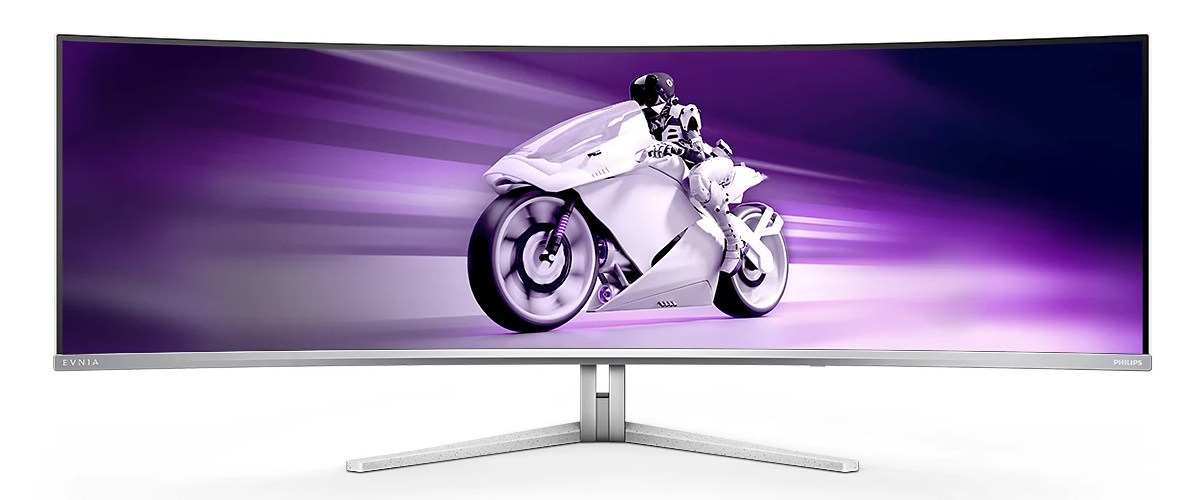
The Philips Evnia 49M2C8900 is a high-end gaming monitor, that is based on an ultrawide 49" 240Hz VRR 5120x1440 QD-OLED panel. Other features include Adaptive-Sync, NVIDIA G-SYNC and AMD FreeSync support, HDMI 2.1 VRR and a 30 W audio system. The Philips monitor will ship in September 2023, for around $2,100.
Sharp launches its first QD-OLED TV, the AQUOS FS1
Sharp announced its first QD-OLED TV, the AQUOS FS1 series. Available in 55-inch and 65-inch 4K models, the the FS1 is based on Samsung's QD-OLED panels.
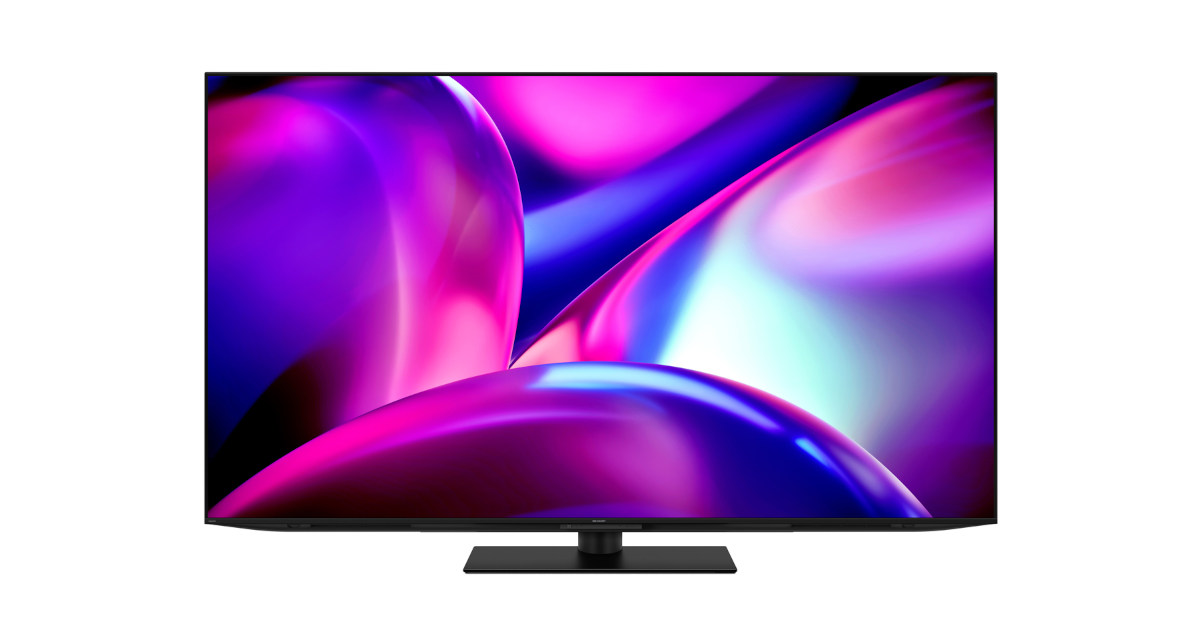
The FS1 uses Sharp's Medalist S4X AI image processing engine, 11 speakers 85W sound system (ARSS+), Dolby Atmos and Google TV platform. The TVs will ship by September 2023.
China-based Red Magic announces a 49" curved QD-OLED gaming monitor
China-based Red Magic announced a new gaming monitor, based on a 49-inch QD-OLED panel (produced by Samsung Display). The Magic Realm full specification is a 49" 240Hz 5120x1440 curved (1800R) display, and it offers FREE-SNYC and G-SYNC compatibility and built-in 5W speakers.-
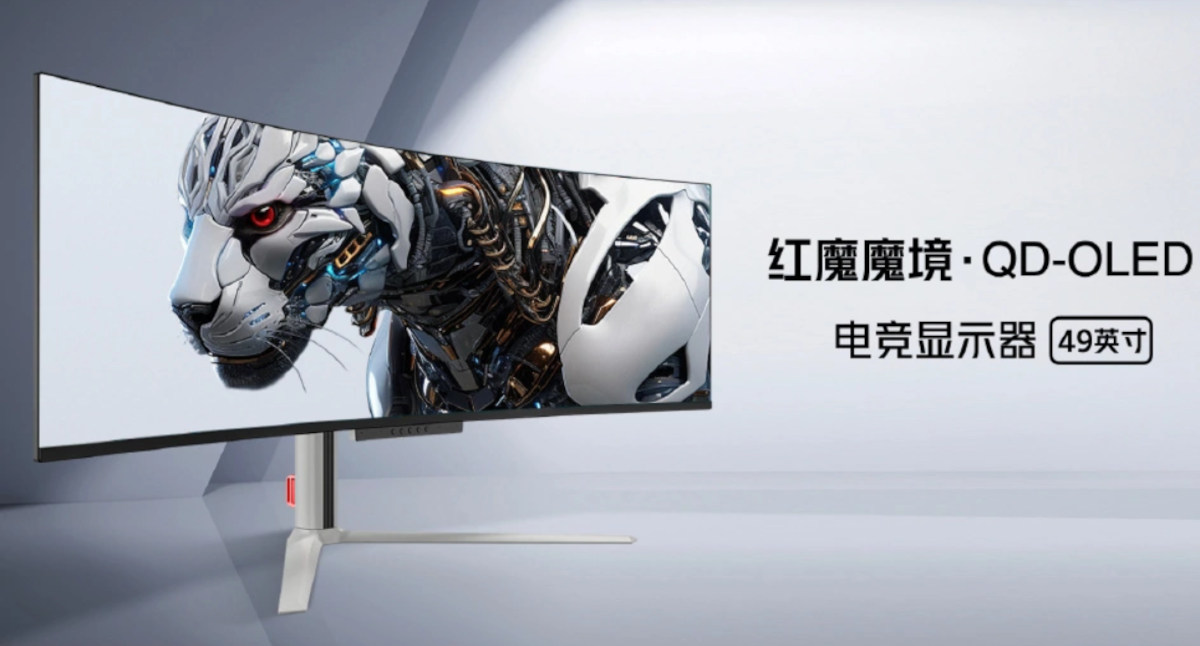
Red Magic did not yet reveal the price or release date of its QD-OLED Monitor.