GS Alliance develops a graphene QD and silica composite to create efficient white LEDs
Japan-based material developer Green Science Alliance developed a new composite material made from a combination of graphene quantum dots and silica, useful to create white LEDs from blue LEDs (440-470 nm).
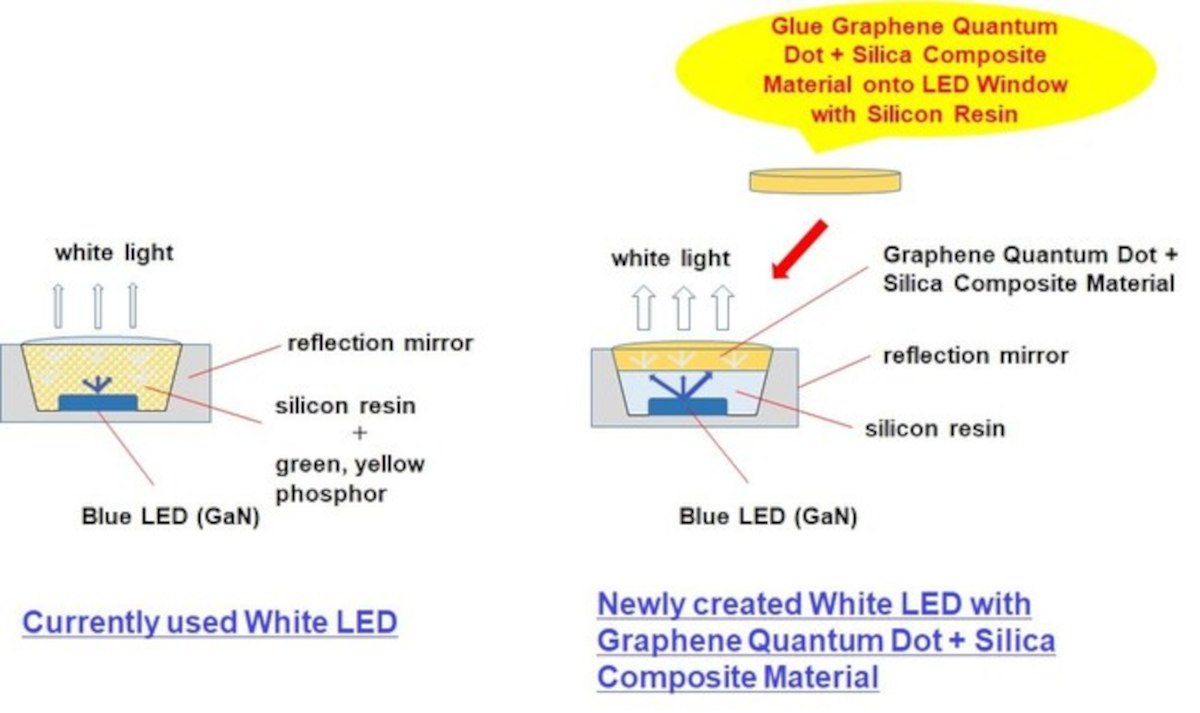
The company says that this is the first adoption of such a material for LED applications. The company says the adoption of the QD and Silica offers superior performance to the currently-used phosphor as the QDs do not suffer from light scattering, and the white LED is more efficient. The material is also not expensive as the graphene QDs can be produced on the cheap. GS Alliance believes the new white LED will be cheaper than current white LEDs on the market.
Read the full story
Posted: Mar 14,2021