QD-LCD

Samsung and Hansol Chemical to introduce new QD films to reduce costs

According to a report from Korea, Samsung has teamed up with its QD supplier Hansol Chemical to simplify the structure of its QD films. The company aims to introduce new lower-cost QD-LCD films.

The report suggests that Samsung developed a technology to encapsulate individual QD particles, and so the new films could be produced without the encapsulation (barrier) films. This will result in a simple structure of only three layers - two PET layers and the QD layer between them. 

Read the full story Posted: Jun 17,2025

DSCC: sales of QD films and diffuser plates grew 42% in 2024, growth to continue in 2025

According to Counterpoint Research (DSCC), Quantum Dots film and diffuser plate sales grew 42% in 2024, driven by demand from QD-LCD and MiniLED TVs. In the notebook segment, revenues grew 228%, mostly due to Apple's first adoption of QDs in MacBook Pro devices.

Counterpoint expects revenues to continue rising, and in 2025 the growth is forecasted to be 27.5% from 2024. The company acknowledges that the US tariffs and trade war may curb demand for premium displays, and Counterpoint has no clear visibility on that issue. 

Read the full story Posted: Apr 23,2025

Apple adopts red QD films for the first time in its latest M4 MacBook Pro laptops

Apple launched its latest laptops, the M4 MacBook Pro models, and according to DSSC the new displays adopt a red quantum dot film for the first time.

Up until now, Apple used red KSF phosphor films, but the QDs offer more accurate and vivid colors as the emission spectrum is narrower. In the past Apple opted for KSF because this technology does not use any Cadmium and it is lower in cost. Apple's new QD films are Cadmium-free.

Read the full story Posted: Nov 16,2024

Hansol Chemical files a complaint against TCL at the FTC, saying its QD-LED TVs do not contain quantum dots materials

A couple of months ago we reported that Korean QD developer Hansol Chemical commissioned SGS and Intertek to test some of TCL's QLED TVs, finding that these do not in fact contain any Cadmium or Indium. Hansol  has now filed a complaint with the Fair Trade Commission (FTC) in the US against TCL, saying that it falsely advertised its TVs as QD-LED TVs.

TCL QDEL TV photo

In its FTC complaint, Hansol mentioned three TCL TV models: C755, C655 and C655 PRO. This will be interesting to watch.

Read the full story Posted: Nov 12,2024

Hansol Chemical, SGS and Intertek question whether TCL actually uses QDs in its QLED panels

Korean QD producer Hansol Chemical, has conducted an analysis on some of TCL's QLED panels, and concluded that in fact these panels do not contain any quantum dots. Hansol commissioned SGS and Intertek to actually perform the study, on TCL's C755, C655 and C655 Pro models.

Hansol says that TCL's TVs do not contain any indium or cadmium at all, which proves the TVs do not contain quantum dots. TCL responded by saying that the TVs do in fact contain Cadmium, although perhaps at a very trace amount not detected by SGS and Intertek. TCL further says that the method used is not sufficient to detect the exact content of Cadmium.

Read the full story Posted: Sep 11,2024

Sony places a miniLED QLED TV at the top of its 2024 TV lineup

Sony announced its 2024 TV lineup, and the top model, the Bravia 9, is a Mini-LED backlit QLED TV. The entry-level model (the Bravia 7) is also a QLED display, while the mid-range model, the Bravia 8, is based on LGD's WOLED panels.

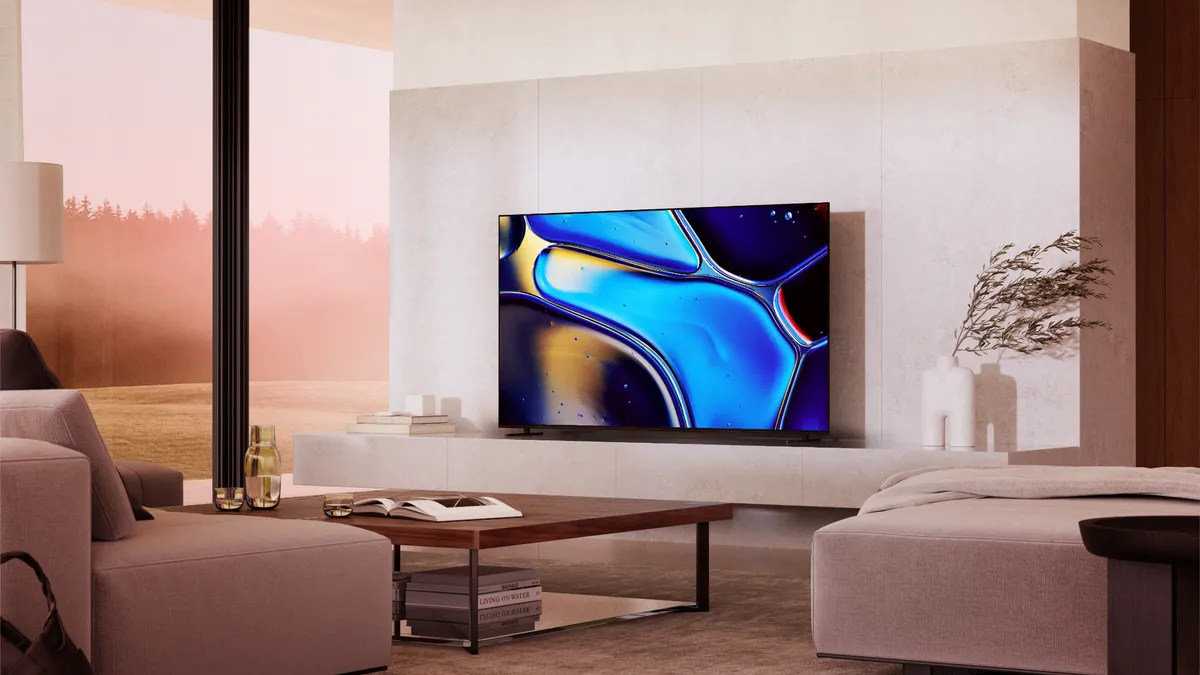
Sony Bravia 8 OLED TV photo

The Bravia 9, Sony's flagship 2024 model, is available in 65-, 75, and 85-inch versions. At 4,000 nits, it is Sony's brightest TV ever, and it includes its XR Triluminos Pro technology and its latest XR Processor.

Read the full story Posted: Apr 18,2024

TCL launches the world's largest miniLED QLED TV at 115-inch

TCL announced what it says is the world's largest miniLED backlit QD display - the QM8 (Model 115QM89). This 115" TV offers 20,000 local dimming zones, TCL's AIPQ Ultra processor,  a 6.2.2 channel speaker system, and the company's High Brightness Ultimate LED backlighting, which can produce up to 5,000 nits of peak brightness.

TCL did not yet disclose the price or availability of the 115" QM8.

Read the full story Posted: Jan 11,2024

IDTechEx: QDs are the ultimate display emitters, the global QD market will reach $550 million by 2034

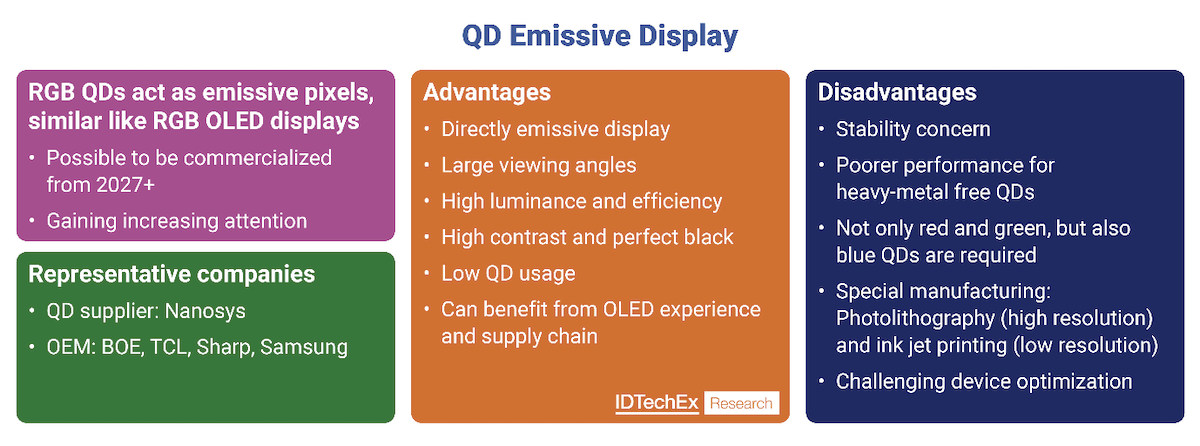
IDTechEx posted an article detailing the company's views on the quantum dot materials market for the display industry. The article details the progress from QD on Edge technology, to QDEF,  QDOG, QDCC and finally QLED displays (emissive QDs, or QD-EL).

IDTechEx believes that QDs are the "ultimate emissive material for displays", tracking efficiency and lifetime improvements. IDTechEx estimates that the global market for QD materials will reach $550 million by 2023 - this includes all QD applications, not just displays (but displays is one of the major markets).

Read the full story Posted: Sep 24,2023

TCL's latest QLED miniLED TV is the world's brightest at 5,000 nits

TCL announced a new flagship QLED 4K TV, the X955 - a miniLED backlit TV, that offers over 5,000 local dimming zones, and a peak brightness of 5,000 nits - probably the brightest consumer TV ever.

The X955 is powered by TCL's AIPQ 3.0 processor, and is available in either 85-inch or 95-inch in size. TCL did not yet reveal the expected price.

Read the full story Posted: Sep 01,2023

DSCC sees QD display production growing 15% in 2023, with further growth ahead

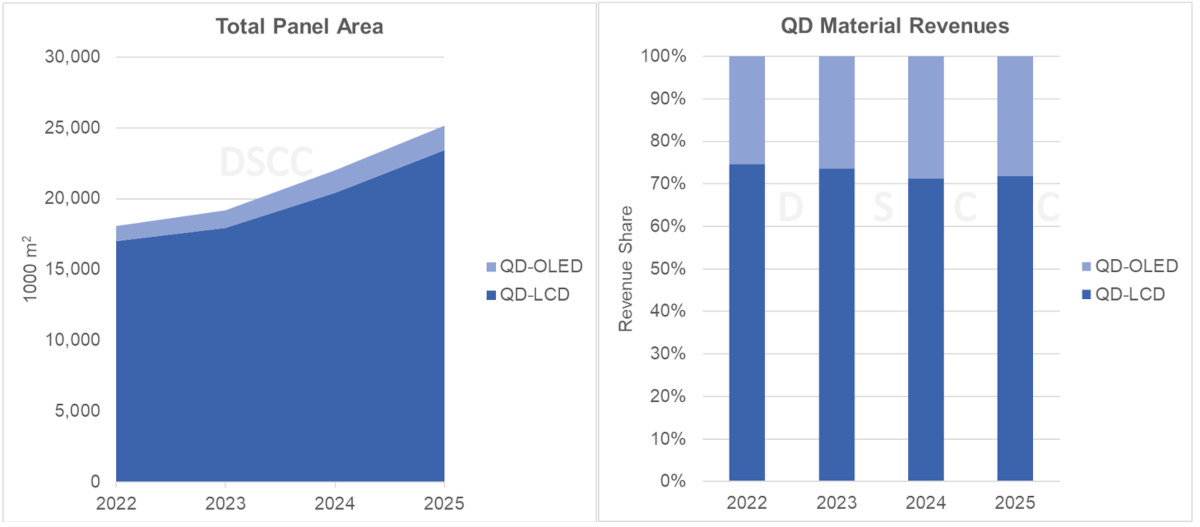
DSCC says that QD displays (QD-OLED and QD-LCD) will continue to grow, with area growth of nearly 15% in 2023. The largest application for QD displays by far is TV, with 15.6 million QD-enhanced TVs to ship in 2023.

Regarding QD-OLED panels, DSCC notes that the only producer today is Samsung Display, that has a converted LCD line with plans to reach a capacity of 45,000 8.5-Gen substrates per month by 2025. The company did not yet commit to further investments. QD-OLED production, by area, will reach 1.7 million square meters in 2025. QD-LCD panel area will reach 23 million square meters in the same year.

Read the full story Posted: Mar 01,2023